1. Audit
Current structure, top-performing pages, traffic sources, conversion paths, technical debt and everything that must survive the move.
Website redesign
A redesign is a commercial decision, not a cosmetic one. The objective is a site that communicates better, converts better and loses none of the value the current domain has already earned.
Current structure, top-performing pages, traffic sources, conversion paths, technical debt and everything that must survive the move.
New information architecture, message hierarchy and a URL map that decides what is kept, merged or redirected.
A new interface and design system, implemented with performance and accessibility as build constraints.
Redirect mapping, metadata transfer, structured data, sitemap regeneration and post-launch monitoring.
Valuable URLs, content and internal link equity are carried across deliberately: a one-to-one redirect map, preserved headings and metadata where they already work, and a crawlable new structure. Some ranking movement after any significant rebuild is normal and we will not claim otherwise — the objective is to avoid avoidable losses, not to promise a flat line.
Our long-form article on migration planning.
What changes visually and why.
The technical base the new site is built on.
Send the current URL and we will reply with concrete observations.
Client work
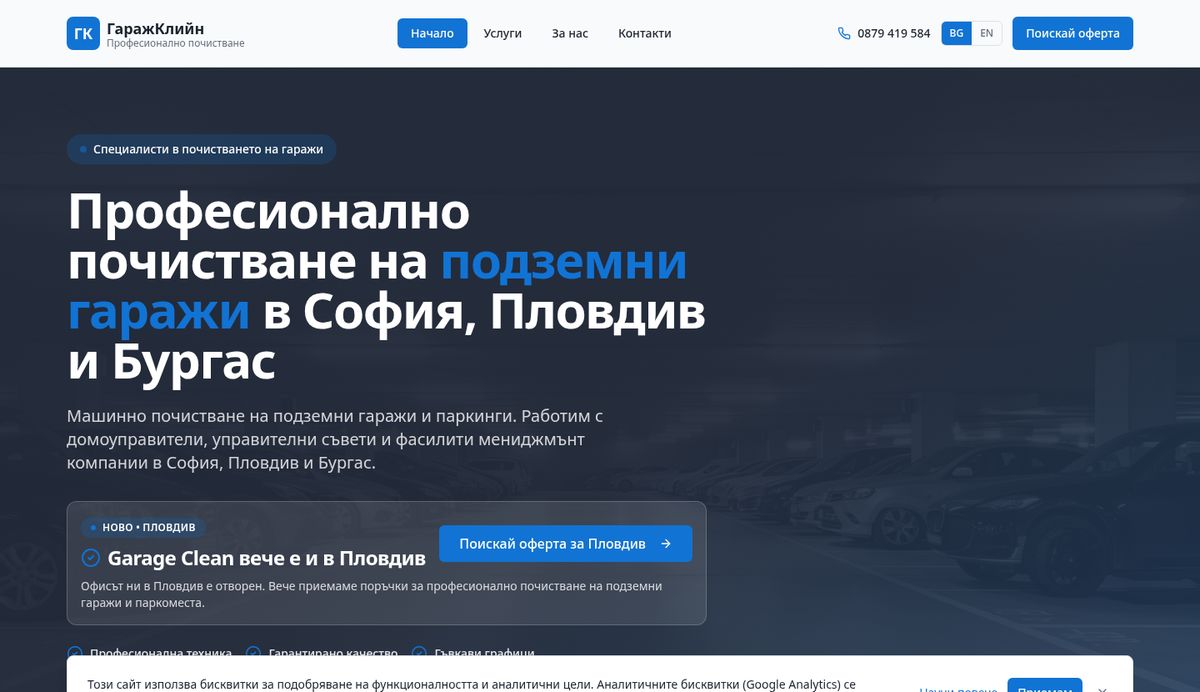
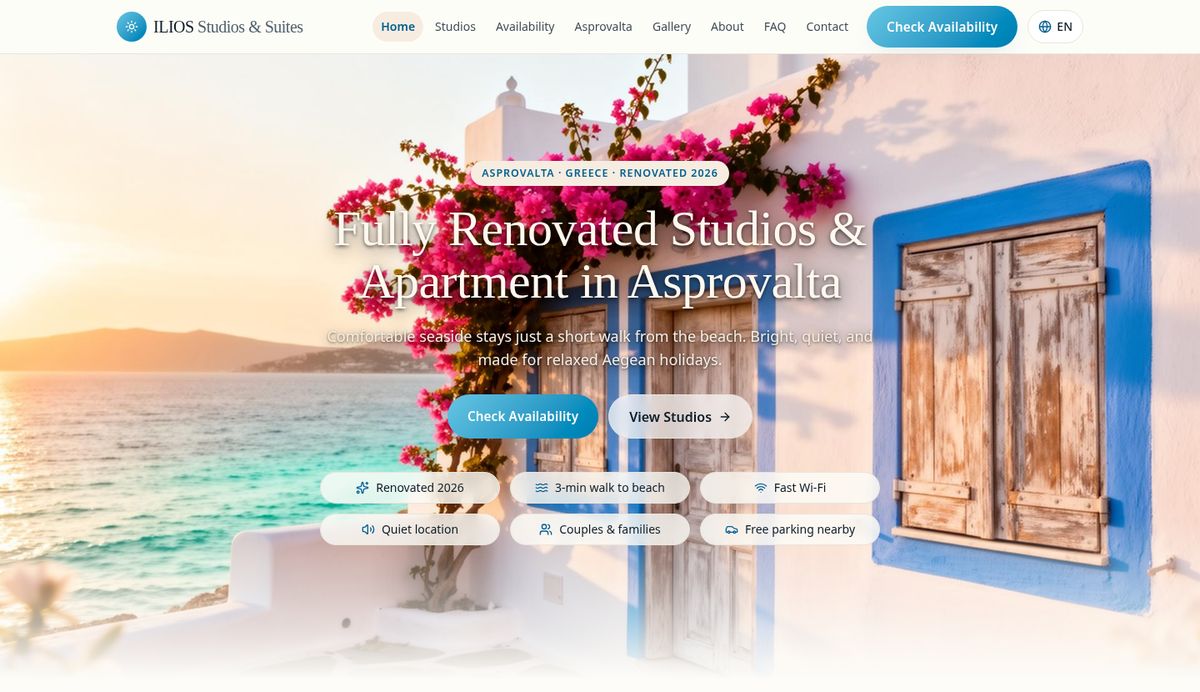
Real client websites first — GarageClean.eu, ILIOS Studios & Suites, SEIJAKU · GoMatcha and VANGARD GROUP. Studio concepts follow, and every concept is clearly labelled as our own work.
A business website for a professional cleaning service, structured around clear service explanation and a direct enquiry path.
Professional Cleaning Services · Business Website · 2025
A direct-booking website for renovated seaside studios and an apartment in Asprovalta, Greece — built around availability, room detail and personal enquiry.
Hospitality & Accommodation · Business Website · 2026
06 — Process
Seven disciplined stages that keep a project predictable, transparent and on schedule.
Understand the business, audience, objectives, current website, competitors and required functionality.
Define information architecture, content structure, page hierarchy, conversion paths and technical requirements.
Create the visual direction, responsive layouts, interface components, interaction model and feedback rounds.
Build the frontend, animations, forms, integrations and CMS or data connections where needed.
Test responsive layouts, browsers, forms, performance, accessibility, technical SEO and metadata.
Prepare production deployment, domain, analytics, indexing, Search Console architecture and final QA.
Optional maintenance, improvements, content updates, technical support and future features.
07 — Website review
Request a short website review. We look at where your current site may be losing clarity, trust or enquiries — and tell you honestly what is worth changing. Four short questions is all it takes.
1 / 4
We use the information you provide to respond to your request and prepare a quotation. Learn more in our Privacy Policy.
Let's create a digital experience built around your business.